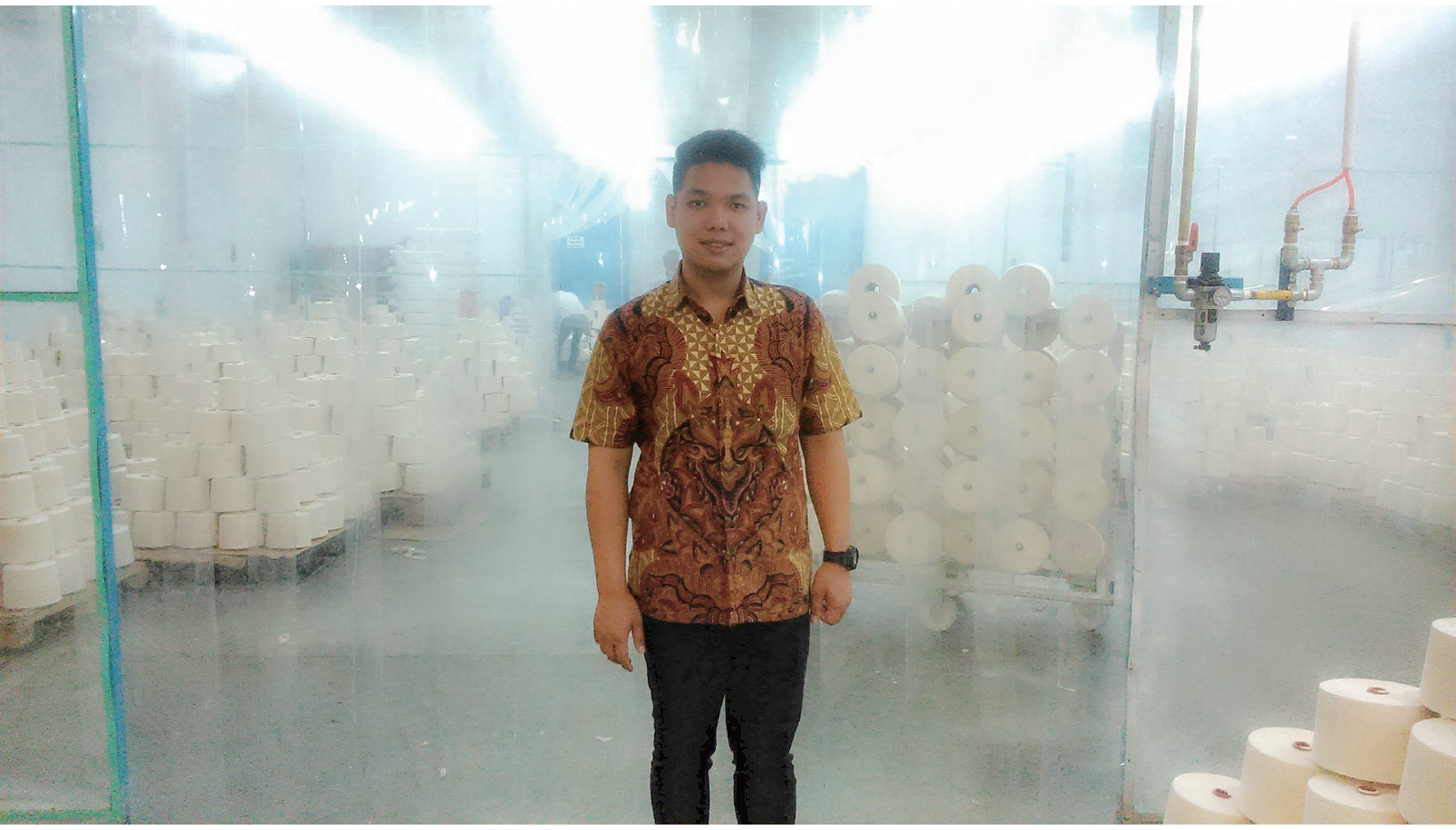
Textile
The emotional connection of the textile industry and Ikeuchi
The textile industry has been a part of Ikeuchi’s history from the very beginning. At the time of its founding, Ikeuchi began fabricating ceramic spinnerets, for the use in the rayon production, an artificial silk yarn. However, after the World War II period, along with the decline of rayon production in Japan, the elimination of the ceramic spinnerets from the market began. Because of this market event, Ikeuchi wanted to continue with the ceramic spinneret technology. Through a painstaking breakthrough, it succeeded in developing the world’s first ceramic spray nozzle.
Spray Nozzles and AKIMist solutions
Since its developed in 1980, AKIMist has been used in high-end textile mills in multiple European countries. There are still many factories in Europe, which are supported by direct spray humidifiers with wetting fog. However, the use of wetting fog humidifiers is affecting the working environment (machinery and employees), and causing multiple detriments to the end products. That is why many textile manufacturers have swicthed to AKIMist Dry Fog Humidifier.
How does the AKIMIst benefit your textile factory?
For textile storage, it is recommended to place the cotton and combed yarns in a highly humid storage room for a period of 24 to 30 hours. The purpose of this storage is to allow the yarn to absorb the proper percentage of moisture. By doing so, this moisture recovery allows the yarn to regain its flexibility, good appearance and color, and retains its original properties. Moreover, for textiles, a suitable humidity environment is valuable as it facilitates the necessary conditions to keep the fibers in qualitative form, to minimize defects, and to prevent breakages caused by drying.
Therefore, with the implementation of the AKIMist, its ultra-fine Dry Fog assists in maintaining and controlling the optimal humidity level without wetting machinery or the product.
Furthermore, you can implement The AKIMist in various stages in the textile industry. Besides regulating the humidification and temperature, the AKIMist can also assist in:
- Preventing ESD from occurring.
- Eliminating the possibility of thread breakage.
- Preventing of fiber dust and fiber waste adhesion to machines.
- Preventing of the sewing machine from jumping.
- Overall, improving the productivity in the textile processes.