Air nozzles
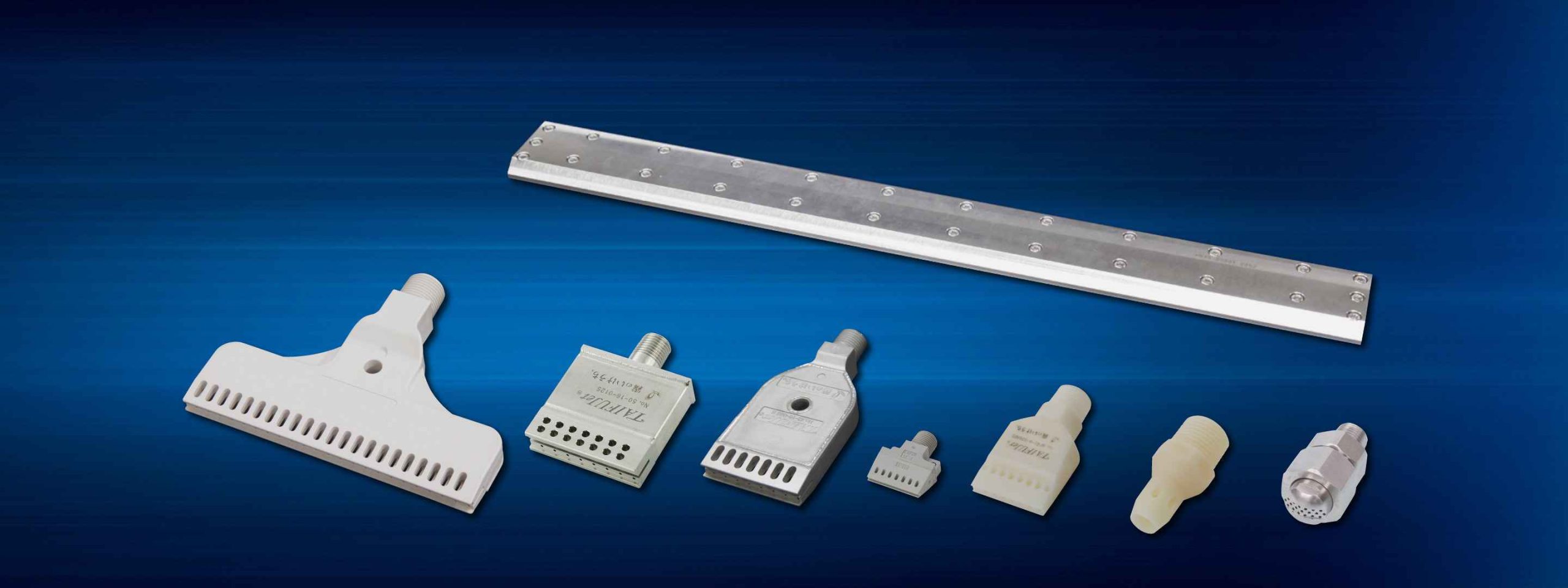
Compare our industrial air nozzles
What are the characteristics of air nozzles
Air nozzles deliver controlled, focused airflow for industrial applications such as drying, cooling, dust removal and product sorting. They use either compressed air or air supplied by a blower, with the choice depending on the required blowing force, coverage and operating conditions.
Ikeuchi’s air nozzles are designed to maximise blowing efficiency while reducing air consumption and operating noise. Available in compact, flat and round designs, our range helps you direct airflow precisely where it is needed, improving process control and reducing unnecessary energy use.
Our range includes two main categories:
- Compressed air nozzles: Connected to a compressor, these nozzles deliver concentrated airflow for precise blow-off, drying and cooling tasks.
- Blower-driven air nozzles: Supplied by a blower, these nozzles provide airflow at lower pressure and can offer an energy-efficient solution for continuous blowing applications.
Compared with an open pipe, a correctly selected air nozzle can reduce noise and air consumption while maintaining the blowing performance required for your process.
Characteristics
- Air supply: Compressed air or blower-driven.
- Blowing pattern: Flat, round or slit jet.
- Air blowing force: The impact needed to remove water, move products or clear debris.
- Noise level: Sound levels under defined operating conditions.
- Blowing coverage: The width and distribution of airflow at the working distance.
- Material and temperature resistance: Suitability for the operating environment.
Compressed air vs blower-driven air nozzles
Compressed air nozzles, such as the TAIFUJet® series, are designed to deliver effective blowing performance while using less compressed air than an open pipe. This helps reduce operating costs and noise while providing precise, controlled airflow.
Blower-driven air nozzles offer an energy-efficient alternative, particularly for continuous blowing applications. By using air supplied by a blower instead of a compressor, they can reduce energy costs to approximately one-third of those of a comparable compressed air setup, depending on the application and operating conditions.
Models such as the TAIFUJet® TF-BF and TF-BR combine air amplification with low-noise operation. Their design helps minimise pressure loss and deliver a powerful, directed air stream for drying, cooling and blow-off applications.
Lower Air Pressure, Same Blowing Impact
The graph shows how blower-driven air nozzles can achieve the same blowing impact as compressed air nozzles at a lower supply pressure. In this comparison, the blower-driven nozzle reaches the required impact at approximately 0.04 MPa (0.4 bar), while the compressed air nozzle requires 0.2 MPa (2 bar).
The blower-driven nozzle compensates for its lower pressure with a higher airflow volume. This demonstrates why air pressure alone is not enough to select a nozzle: airflow, nozzle design and the required blowing impact must also be considered.
45% energy savings with TAIFUJet®
Switching to TAIFUJet® air nozzles can reduce compressed air consumption while improving airflow distribution. In the example shown, 23 TAIFUJet® nozzles replace 44 single-hole nozzles, reducing compressed air consumption from 17,600 to 10,120 normal L/min.
By drawing in surrounding air, the TAIFUJet® nozzles deliver a total blowing volume of 20,700 normal L/min. Compressor energy consumption falls from 100 to 55 kWh, representing 45% energy savings under the illustrated conditions. Actual savings depend on the application and operating conditions.
Noise reduction
Compared to blowing air from holes in copper tubes, our air nozzles have a lower consumption of compressed air, thereby reducing the installation’s operating costs. One of our models, TF-R series, is even able to reduce the airstream consumption by 79-91%.
Our air nozzles have also been designed to comply with the OSHA standards and regulations. Our compressed air driven nozzles aid into reducing the noise between -9 dB(A) and -38 dB(A) from the overall total noise level, thereby complying with the OSHA noise regulations of 8 hours workday exposure to noise levels below the average 85 dB(A).
At Ikeuchi, we have determined the fundamentals to select the right nozzle for your application based on their characteristics. When selecting the nozzle, we advise you based on your required spray angle, spray capacity, optimum spray pattern, and spray distribution.
Reduce Air Nozzle Noise by 15 dB(A)
The graph shows how noise levels increase with air pressure for both the TF-F series air nozzle and a conventional single-hole nozzle. When using the same air volume, the TF-F nozzle produces less noise. The highlighted comparison shows 78 dB(A) for the TF-F nozzle versus 93 dB(A) for the single-hole nozzle, a reduction of 15 dB(A).
The table explains the significance of this difference. Decibels follow a logarithmic scale, so a 15 dB reduction corresponds to approximately 80% lower sound pressure. This does not mean an 80% reduction in perceived loudness, but it demonstrates the substantial noise reduction achievable through nozzle design.
Selecting the correct air nozzle
Selecting the right air nozzle helps you achieve effective drying, cooling or blow-off while controlling air consumption and noise. Start with your application and available air supply, then consider the required blowing force, airflow pattern, coverage and working distance. Operating pressure, material and temperature resistance also influence your choice. Ikeuchi can help you compare compressed air and blower-driven nozzles to find a suitable solution for your process. Please visit our guide on how to select an air nozzle.
Comparison of Ikeuchi air nozzles

Try our air nozzle finder
Filter on air supply, blow pattern, air pressure and more to find the most suitable air nozzle for your application.
Suitable applications
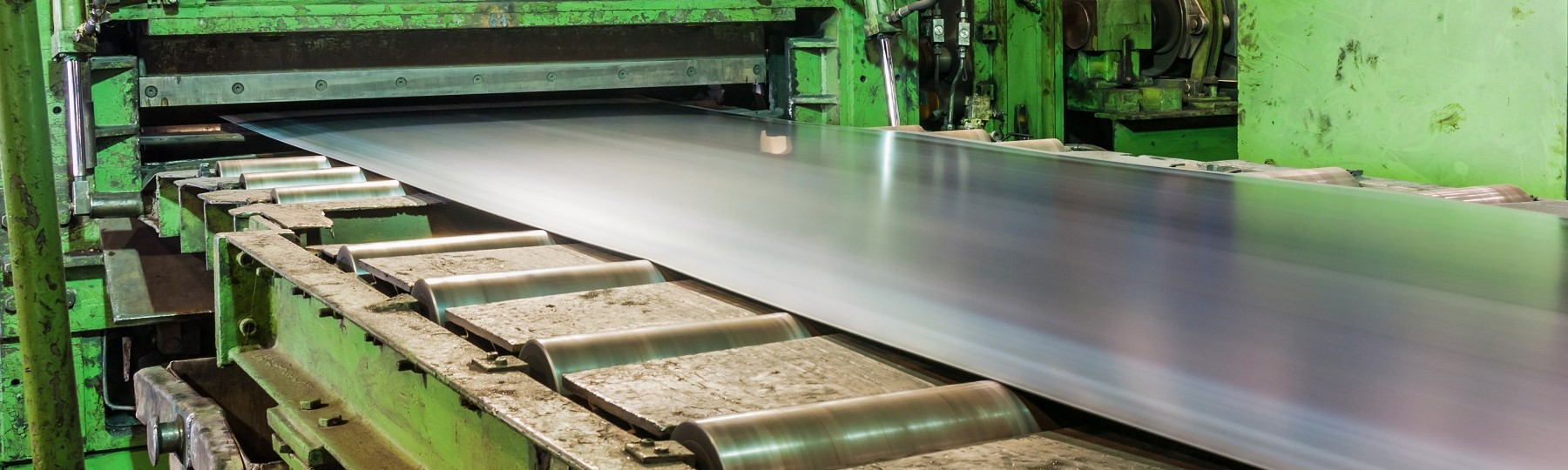
We supply a wide variety of air-nozzles for multiple industrial operations. Depending on the type of application requirement, we can recommend a suitable air-nozzle that can be relevant for that requirement. As reference, we can provide the following air nozzle applications’ examples:
- Air curtain
- Blow-drying after washing
- Blowing off of dust under high temperatures
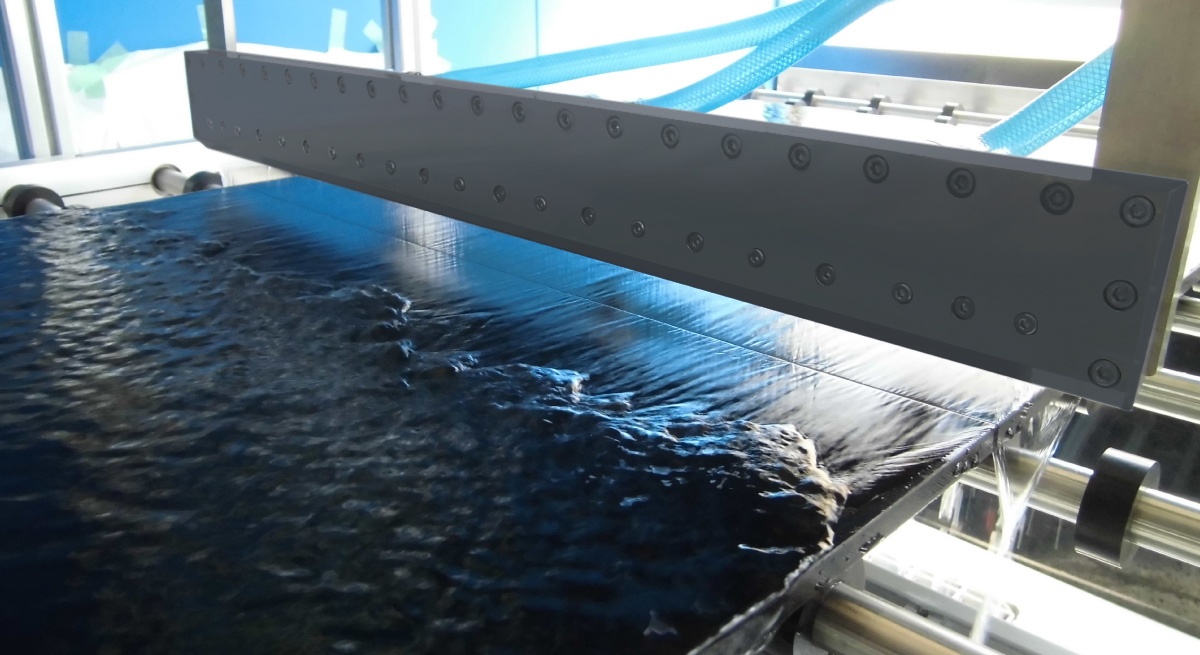
- Blowing off liquid
- Blowing off of water from shaped steel
- Cleaning in narrow spaces
- Pinpoint cooling for moulded plastic
- Rejection of inferior products
Usage examples of air nozzles in different industries

FAQ regarding air nozzles
1: What is an air nozzle?
An air nozzle is a device that directs compressed air or blower-supplied air into a controlled stream. It shapes and concentrates airflow to provide the blowing force and coverage needed for industrial tasks such as drying, cooling, cleaning and removing dust or liquid from surfaces.
2: What are air nozzles used for?
Air nozzles direct airflow for industrial drying, cooling, cleaning and blow-off applications. Common uses include removing water after washing, clearing dust from components and sorting or moving products on production lines.
3: How do air nozzles work?
Air nozzles convert compressed air or blower-supplied air into a controlled air stream. Their design determines the blowing force, coverage and airflow distribution. Some designs also draw in surrounding air to increase the total airflow
4: Can air nozzles reduce energy consumption?
A correctly selected air nozzle can reduce compressed air consumption compared with an open pipe or drilled hole while maintaining the required blowing performance. Actual energy savings depend on the nozzle, operating pressure, duty cycle and existing installation.
5: Should I choose a round or flat air nozzle?
Flat air nozzles distribute airflow across a wider area, making them useful for drying surfaces or removing liquid across a production line. Round air nozzles concentrate airflow on a smaller area for targeted cleaning, cooling or product ejection.
6: What is the difference between an air nozzle and an air atomising nozzle?
An air nozzle blows air without spraying liquid. An air atomising nozzle combines air and liquid to produce droplets for applications such as humidification, coating or cooling. The correct choice depends on whether the process requires airflow alone or a liquid spray.
Benefits of using Ikeuchi air nozzles
We developed our Ikeuchi air nozzles to maximize the blowing efficiency by providing a uniform and powerful air stream impact.
Ikeuchi air nozzles provide a reduction in noise between -9 dB(A) and -38 dB(A) from the overall total noise level.
Our air nozzles require a lower consumption of compressed air flow. This leads to a reduction in energy costs and installation costs.
Guaranteed performance
Ikeuchi is an expert in nozzles since 1954, which ensures you the highest quality and expert knowledge in this field.
All our nozzles are developed and produced in-house. This ensures the highest possible global standard.
From our European branch office in the Netherlands and with the help of our wide distributor network, we are able to serve all European countries efficiently.
Download our air nozzle catalog and dive into our many different solutions for various industries and purposes
Air nozzle case studies